
WHAT IT’S ALL ABOUT:
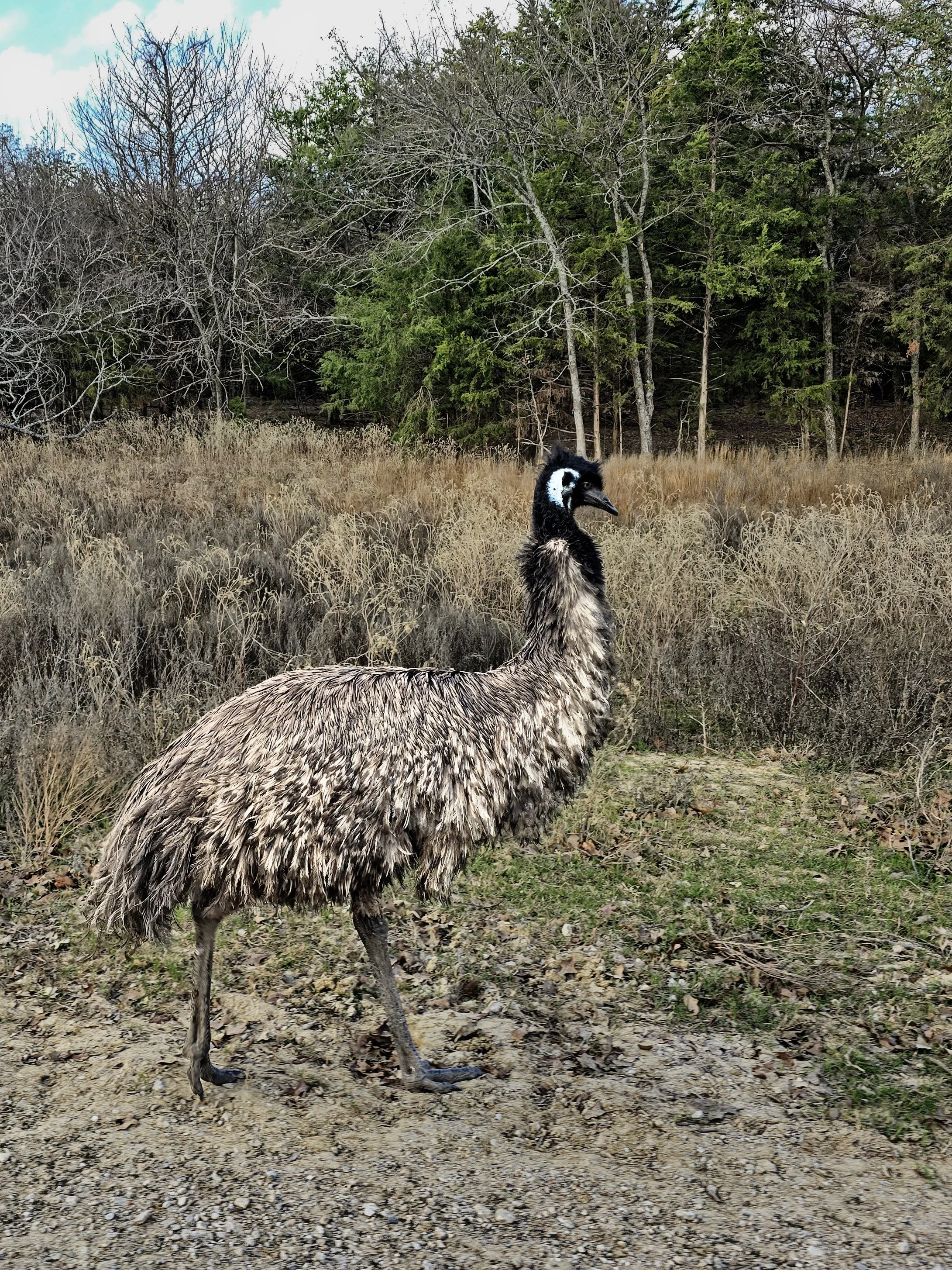
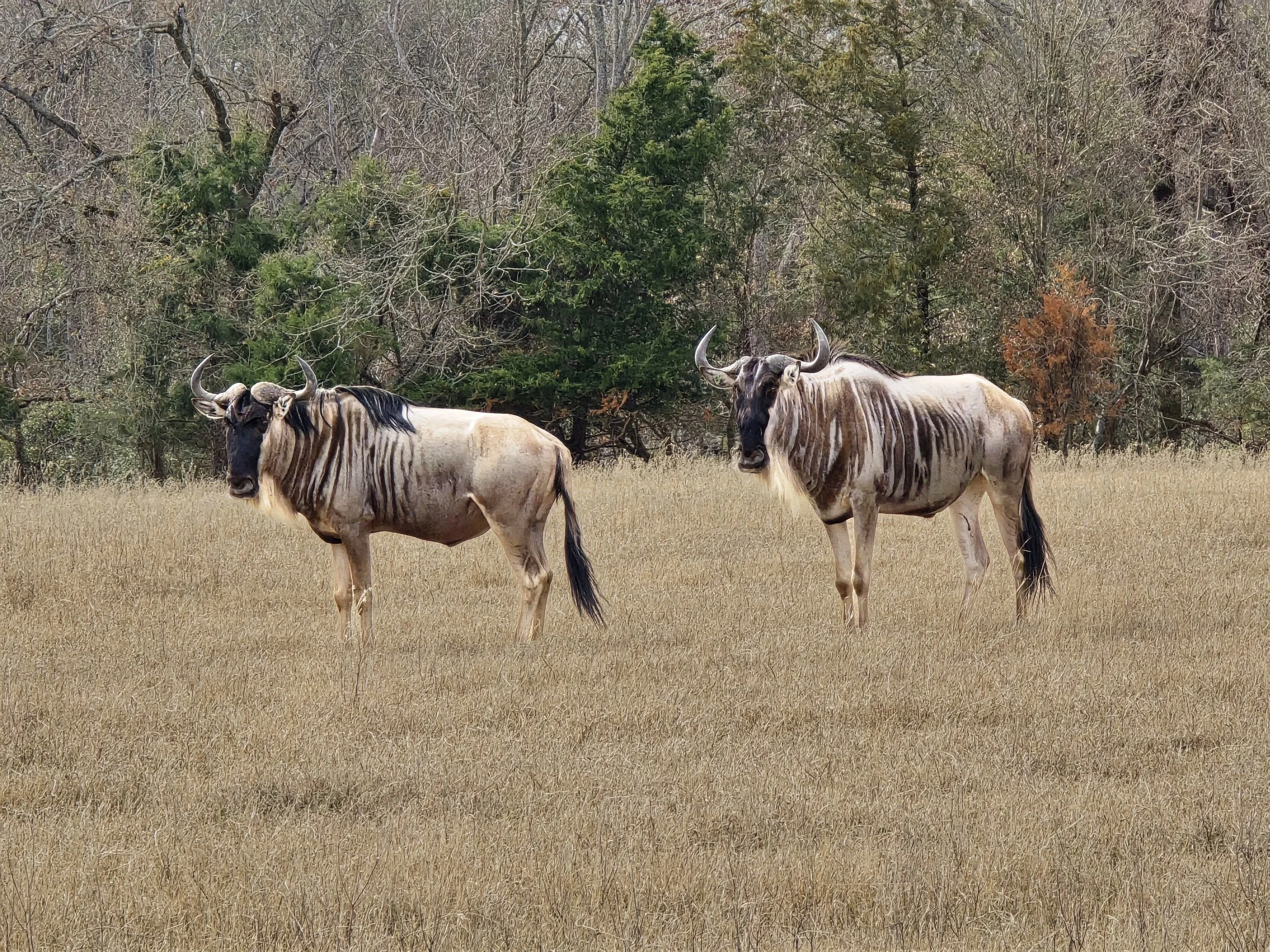
In the past, HNP has organized several field trips to Fossil Rim Wildlife Center near Glen Rose, about two hours southwest of the Heard Nature Center. Everyone I know of who has participated has had good experiences observing, photographing, and feeding the exotic animals there. However, Fossil Rim is not the only place in North Texas where people can experience and photograph exotic animals. We have yet to visit another Texas exotic animal park that is closer than Fossil Rim (just over one hour southeast of the Heard Nature Center near Kaufman), and admission is slightly less expensive than Fossil Rim. Both are drive-through parks, that take 1.5 to two hours to drive through. Like Fossil Rim, Texas Zoofari Park sells bags of feed that visitors can use to attract and feed animals up-close and personal. Really up-close and personal.
The two parks are fairly similar though Fossil Rim has been around longer, is larger, and probably has more total animals. My impression is that they are quite similar in the variety of species they maintain. Each park has some species that the other does not.
Admission to Texas Zoofari Park costs $25.95 for adults (ages 13 to 64), $23.95 for senior citizens (ages 65+), and $21.95 for children (ages 2 to 12). Children under 2 are admitted for free. You can go to the Website and download a copy of the Guide Book ahead of our field trip. Use it to familiarize yourself with the park and the animals residing there.
Assuming no children in my vehicle who would be thrilled to have wild animals eating out of their hands, my reconnaissance trip convinced me that, if I am there to photograph the animals, I probably would forego purchasing the animal feed and focus on photography. The animals get quite assertive about the food, and it’s hard to get good photos if the animals are sticking their heads in your vehicle. But do whatever floats your boat if you want to experience the animals eat out of your hands.
The park has a ten-acre walk-through Safari Village at the end that includes a giraffe feeding area, a petting zoo, a budgie aviary, a kangaroo walk-about, and a gift shop. The budgie barn is a delight with dozens of flying Easter eggs. The petting zoo allows you to get very close to the small, cute animals.
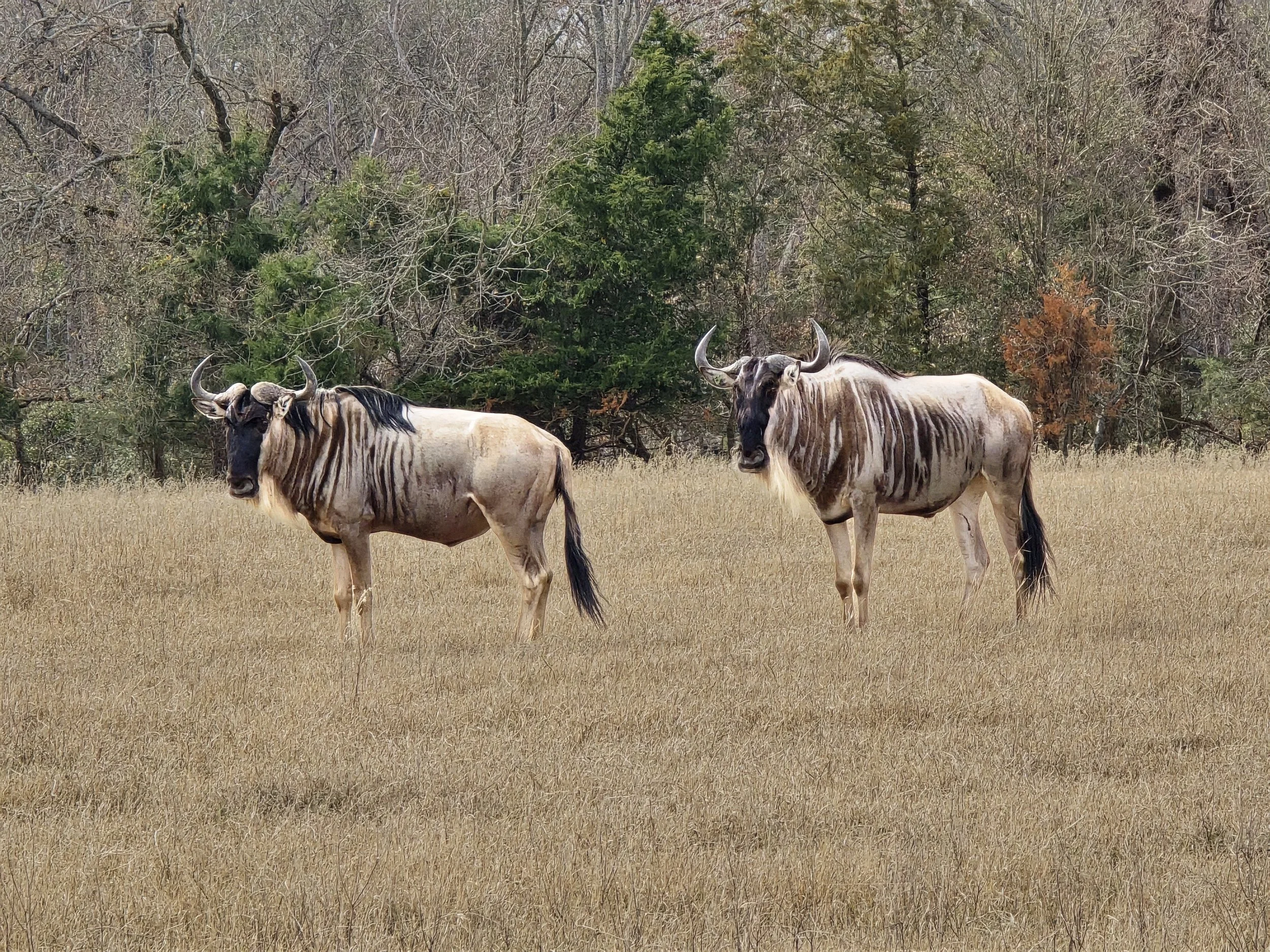
The challenge for photographers is to get shots of wild animals and their behaviors that look natural in an environment filled with vehicles, fences, and barns. With patience and ingenuity, it is possible, and it’s a great chance to hone photographic skills by taking best advantage of light and short windows of opportunity.
TRAVEL:
The most direct way to get to the Texas Zoofari Park is to get to U.S. 80, eastbound, and follow it toward Terrell. Just before Terrell, exit onto state highway 557 to connect to I-20. Follow I-20 through Terrel and exit 506 to FM 2728 for a short distance before turning right onto FM 429. Continue for several miles on FM 429 until you reach Texas Zoofari Park.
LUNCH:
There are no restaurants near the Texas Zoofari Park. The staff there indicated that the nearest decent restaurants are in Terrell. Rosa’s Mexican Cocina is right along our way back home, and they make all their food by hand from scratch. The menu has a lot to choose from, they are reasonably priced, and they are very accommodating. I think we will have a pleasant experience there.
If we arrive at the park when it opens at 9:00 a.m., we can spend a couple of hours doing the drive-through and spend some time at the Safari Village. It’s about a 15- to 20-minute drive from the park to Rosa’s. So, let’s plan on leaving the park between 11:15 and 11:30 to arrive at the restaurant. That way, we should arrive at Rosa’s slightly ahead of the lunchtime rush.
Rosa’s Mexican Cocina
307 I-20
Terrell, Texas 75160
469-474-7011
SUGGESTED EQUIPMENT:
We will not be allowed to get out of our vehicles during the drive-through portion of the park, and the animals will be where they will be. A telephoto zoom lens will be essential. Some animals will get very close or move away, requiring you to quickly zoom in or out, and some animals will be a long way off. (I will be taking a 24-70 mm zoom, a 70-200 mm zoom, and a 200-600 mm zoom. I will also have 1.4X and 2.0X teleconverters to extend my range if necessary.)
Since we will not be allowed to get out of our vehicles, no tripod will be necessary. However, a beanbag or other car window support could be quite useful. Just make sure that the more assertive animals looking for food don’t nuzzle or lick the lens or knock your camera out of your vehicle. (FYI: I use a LensCoat LensSack Pro that supports up to an 800 mm lens. I filled it with buckwheat hulls and mounted a tripod head on it that also supports a heavy lens. You don’t need anything so elaborate, I just thought I would put that out there in case someone wants to pick up a car window support before our field trip. There are lots of other options but having something that allows you to rest your camera and long lens on your car window and also provides some protection from vehicle vibration, especially with a long lens, will be helpful.)
Extra Batteries and Memory Cards
Water
Snacks
Since we will be inside our vehicles, you should not need extremely warm clothing. However, in March you never can tell what the weather will do, and with the windows down you may want to put on a jacket. Also, when walking around the Safari Village at the end of the tour, it could bet a little chilly. As I said, you can never tell.
CONTACT INFORMATION:
Contact me if you have questions:
Tom Martin
HNP Field Trip Coordinator
469-261-3045
hollyfox07@gmail.com